
Structuring a DC24V Bridge Outline into Segments and Zones
How a bridge outline enquiry is structured: 1000/500/260 mm linear segments, DC24V supply, IP65 construction and a client-side voltage drop check.
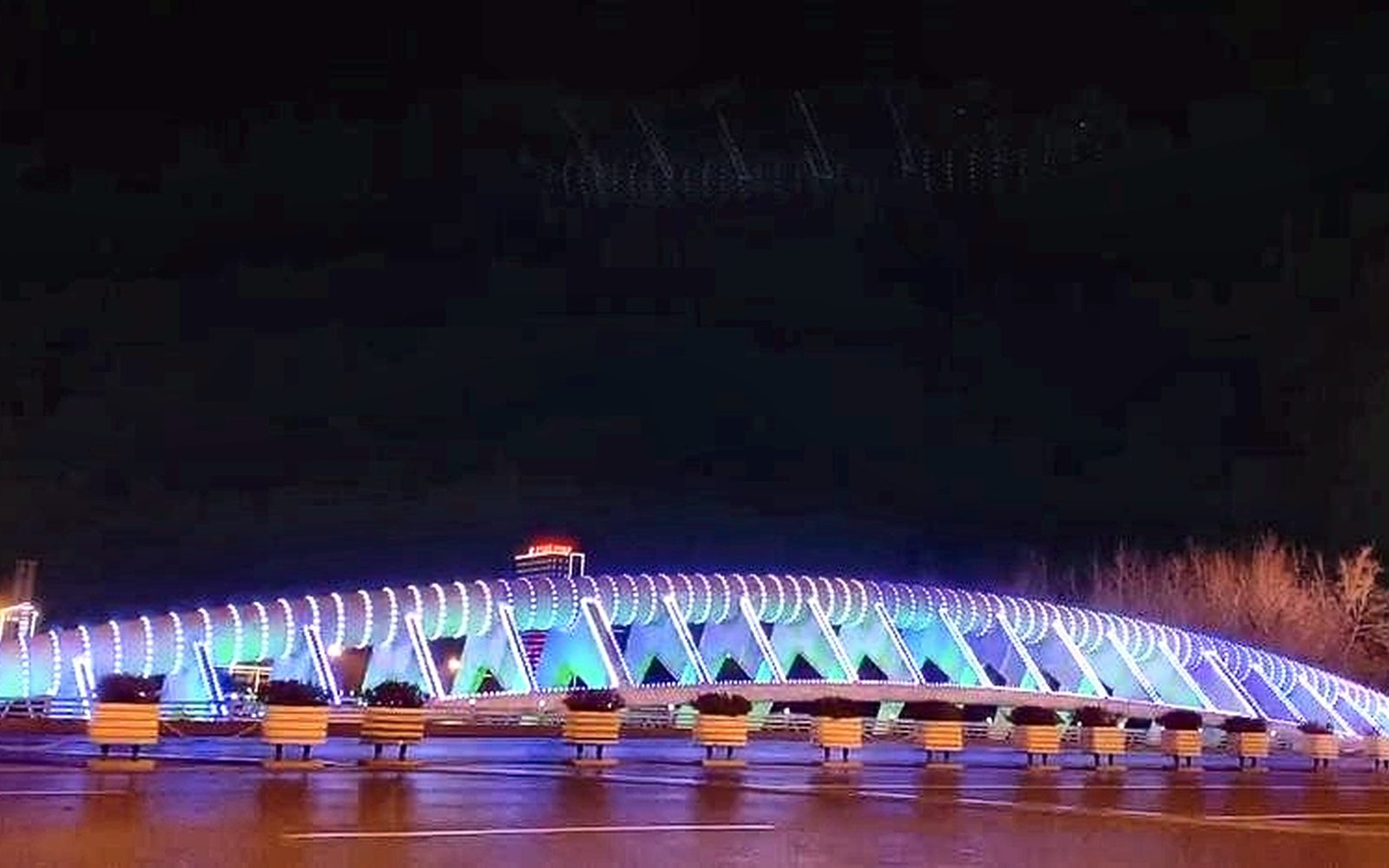
A bridge outline is not one continuous luminaire run; it is a sequence of fixed-length segments split at structural joints and power injection points. For an anonymised bridge enquiry, GDXC structured the schedule around 1000, 500 and 260 mm catalogue lengths at DC24V and IP65, with separate ON/OFF, TTL and DMX512 control rows, and left voltage drop and injection spacing to the client electrical engineer.
The starting condition
The enquiry asked for a continuous outline along a long deck and parapet. Treat it as a single run and the schedule will miss corner segments, movement joints, feed points and the difference between static and addressable sections. The catalogue gives segment lengths and control modes, but not a guaranteed maximum cascaded run.
Constraints
| Segment lengths | 1000 / 500 / 260 mm nominal |
|---|---|
| Supply | DC24V on catalogued linear families |
| Ingress protection | IP65 as stated in the catalogue; confirm per model |
| Control | ON/OFF, TTL, DMX512 listed on separate rows |
| Diffuser | Transparent PC, diffused PC, acrylic, silk-screened glass |
| Catalogue description | 160 mm wire spacing and 30 pixels per string are descriptive, not field limits |
| Site engineering | Voltage drop, injection points and fixing design stay with the client |
What changed in the specification
- Run structure
- Control rows
- Rating
- Electrical design
What the review changed, and why
- Convert the elevation into a run schedule Total length, corner conditions, movement joints and feed positions were recorded first, then mapped onto 1000, 500 and 260 mm segments. Corners and joints are explicit schedule lines, not offcuts.
- Choose diffuser per visibility Sections visible at pedestrian or driver eye level were assigned diffused PC or silk-screened glass; transparent PC was reserved for sections where the diodes are not directly visible.
- Separate control zones Static outline sections and any chasing or flowing sections were listed on separate BOM lines because ON/OFF, TTL and DMX512 variants have different cabling and control gear.
- Hand over the electrical checks We issued the segment schedule and connector notes, and explicitly left voltage-drop calculation, power injection spacing, cable gauge and structural fixing design to the client engineer. The catalogue does not publish a field maximum run length.
“A segment schedule is what stops a bridge outline from being ordered as one impossible run. We fix the lengths, diffusers and control rows; voltage drop and injection spacing belong to the site electrical design.”
GDXC Project Engineering, Internal engineering note - not a customer testimonial — Bridge lighting contractor (anonymised)
Where this approach stops working
This is an anonymised description of a recurring engineering question, not a completed bridge project. No project name, bridge length, fixture quantity, price or performance result is claimed. We do not publish roadway or navigation lighting, structural fixing design, or a guaranteed maximum cascaded run length.
Lighting effect references
Related product families
Architectural Linear Lights
An architectural linear light is a continuous extruded luminaire used to trace building outlines, curtain wall mullions, bridge edges and cornices rather than to wash a surface. Guangdi Xingcan catalogues 10 GD-L linear models plus the GD-U contour families, typically in 1000, 500 and 260 mm lengths at DC24V, with IP65 construction, single colour / RGB / RGBW output and ON/OFF, TTL or DMX512 control..
View productPixel & Point Lights
A pixel point light is an individually addressable LED node used to build low-resolution video, animation and chasing effects across a building skin or bridge cable. Guangdi Xingcan catalogues 27 pixel and point light models (GD-P and GD-PM families), with DC12V/DC24V supply, single colour / RGB / RGBW output, DMX512 control and node densities from 36 to 400 points per square metre..
View productFlexible Linear Lighting
A co-extruded flexible linear profile, commonly called LED neon flex, is a continuous silicone-encapsulated LED strip that emits a dot-free line and can follow curved outlines. Guangdi Xingcan documents 53 such entries: 48 neon flex profiles, 2 wall-washer strips and 3 slim rigid bars, with sections from 6x6 mm to 20x20 mm, a 120 degree emitting angle and top-view, side-view and COB variants..
View productFrom a Night-Effect Photo to a Wall Washer Shortlist
Read application noteSizing a DMX512 Channel Budget for a Mixed RGB/RGBW Facade
Read application noteSeparating Dry, Rain-Exposed and Submerged Lighting Zones
Read application noteSend your facade drawings or lighting effect renders
Share an elevation drawing, an effect render or a draft fixture list. Our project engineers return a fixture BOM, beam-angle and optical distribution suggestions, and DMX512 addressing coordination. Final selection, quotation and installation are confirmed with your technical team.