
DMX512 Pixel Point Lights for Media Facades
Architectural LED pixel and point lights: 27 models in the 2026 catalogue, DC12V/DC24V, RGBW, 36-400 points per square metre, DMX512 media facade control.
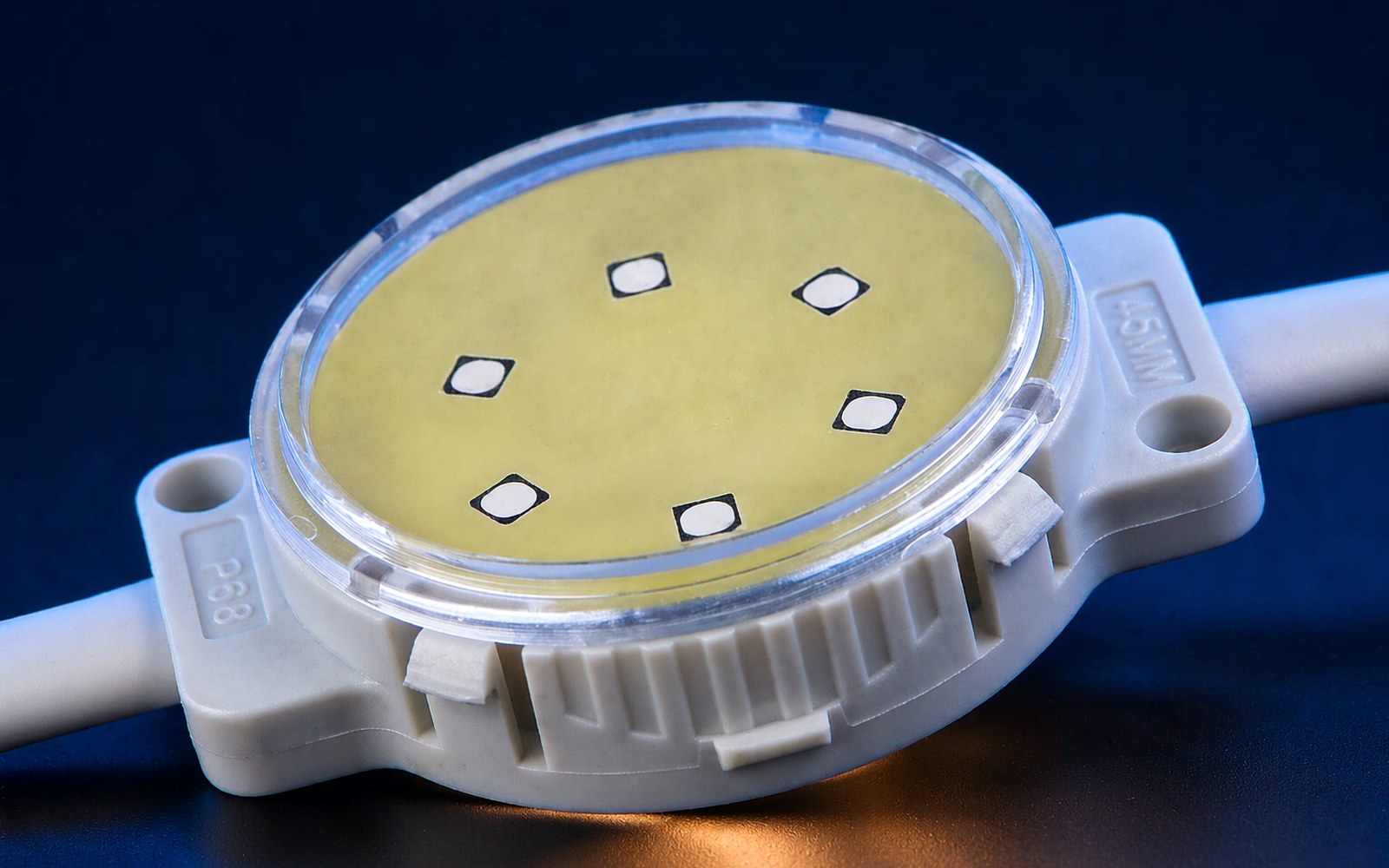
A pixel point light is an individually addressable LED node used to build low-resolution video, animation and chasing effects across a building skin or bridge cable. Guangdi Xingcan catalogues 27 pixel and point light models (GD-P and GD-PM families), with DC12V/DC24V supply, single colour / RGB / RGBW output, DMX512 control and node densities from 36 to 400 points per square metre.
Scope: what this family covers
This page covers discrete addressable nodes for media facades, bridge cables, dynamic patterns and landmark animations. It does not cover continuous flexible neon flex, rigid linear outline luminaires, LED display screens or architectural video walls. Content creation, media server programming and structural fixing design are outside our scope.
Specifications
| Catalogue models | 27 pixel / point light models in the 2026 catalogue (GD-P, GD-PM) |
|---|---|
| Input voltage | DC12V / DC24V by model |
| Colour | Single colour, RGB, RGBW |
| Control | DMX512; some entries list TTL or ON/OFF |
| Node density | 36 / 64 / 100 / 144 / 256 / 400 points per square metre on GD-P23-M configurations |
| Ingress protection | IP65 as stated in the catalogue; confirm per model |
| Catalogue notation | Some source tables spell the protocol MDX512; DMX512 is the confirmed term |
| Supply description | 160 mm wire spacing and 30 pixels per string appear as catalogue descriptions, not field limits |
Housing and diffuser materials
- Die-cast or extruded aluminium node body
- PC or glass front cover
- Silicone sealing and waterproof cable glands
- Stainless fixing screws and mounting clips
- UV-resistant cable jacket on outdoor variants
From drawing to shipment
- Pixel pitch and viewing distance Node density is set from the intended viewing distance and the facade area. Catalogue configurations include 36, 64, 100, 144, 256 and 400 points per square metre; higher density increases node count, cable count, controller universes and power supply size.
- Addressing and universe plan We lay out DMX512 addressing and channel count with the client before the BOM is issued. RGB and RGBW nodes consume different channel counts, and mixing them without an addressing plan is the most common cause of a media facade failing commissioning.
- Cable and power schedule Wire spacing, string grouping and injection points are recorded per facade zone. The 160 mm spacing and 30-pixel-per-string figures in the catalogue are descriptive entries, not guaranteed maximum run lengths; the client engineer verifies voltage drop for the installed layout.
- Batch grouping and function check Nodes for one visual zone are grouped by production batch to reduce colour and brightness variation. Every node is powered and checked for address response and connector integrity before packing.
- Installation and commissioning handover We communicate fixing points, cable routing and waterproof connection requirements. Content creation, controller programming, media server setup and final commissioning remain with the client system integrator.
Pixel & Point Lights: profiles, lenses and connectors
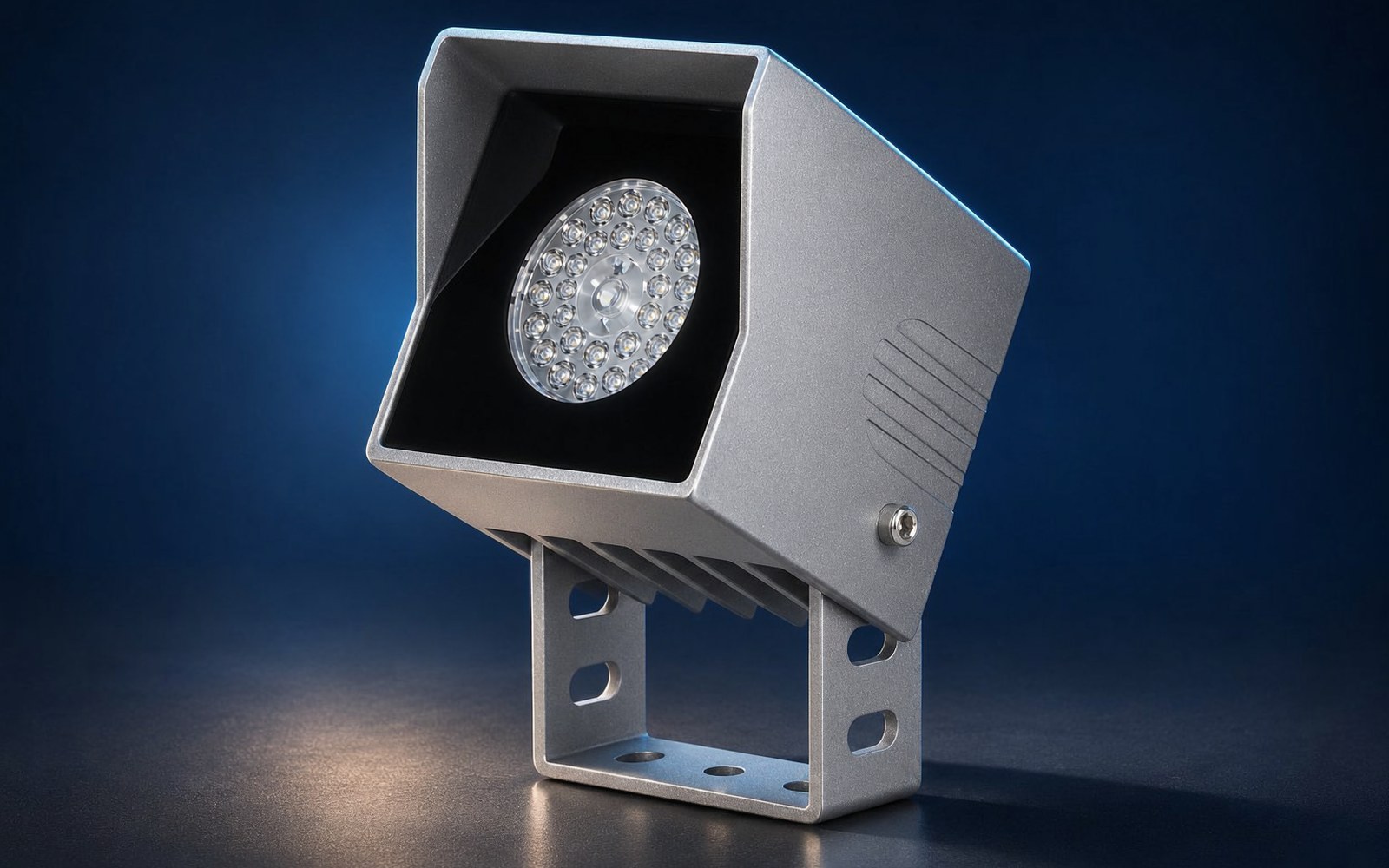
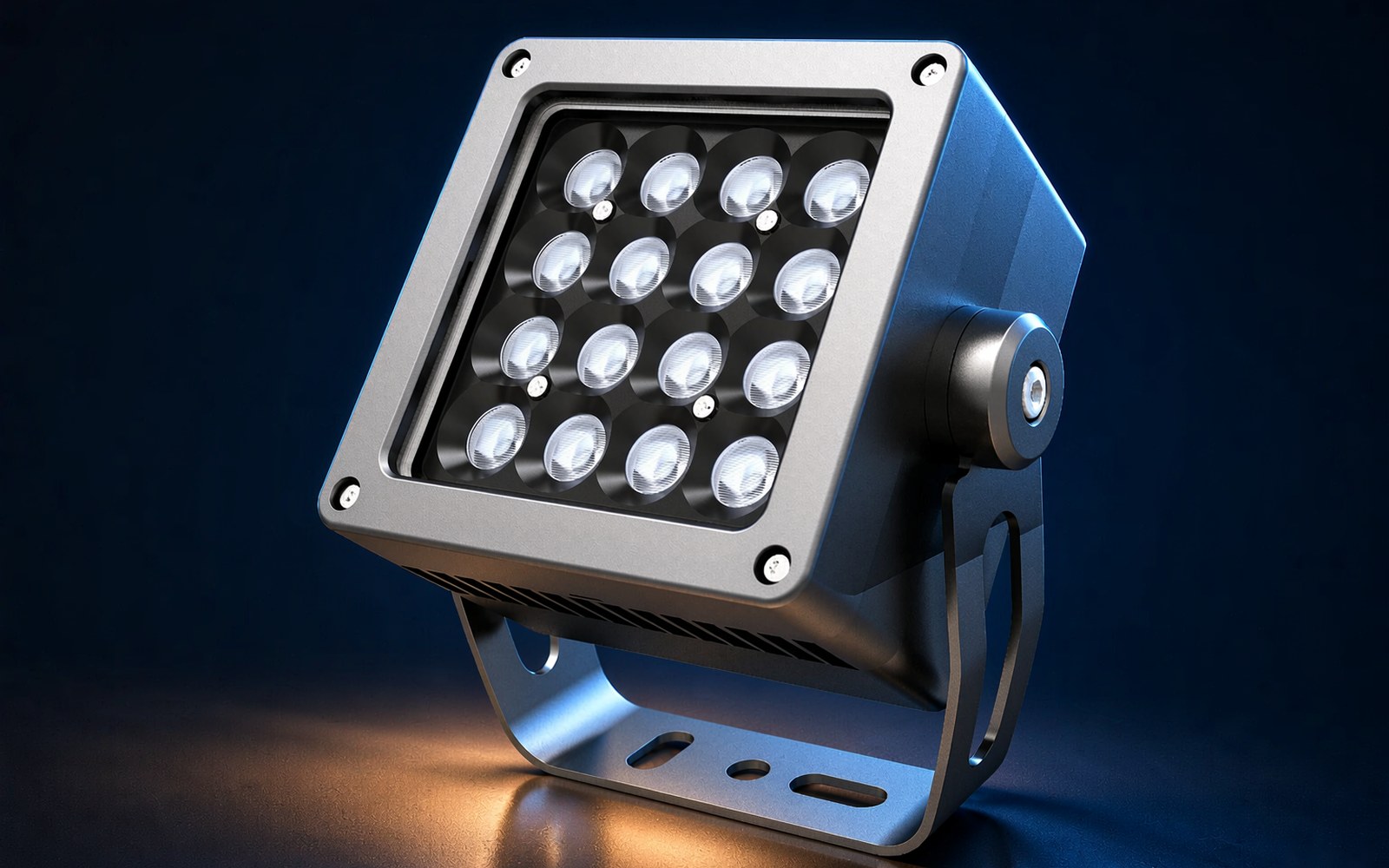
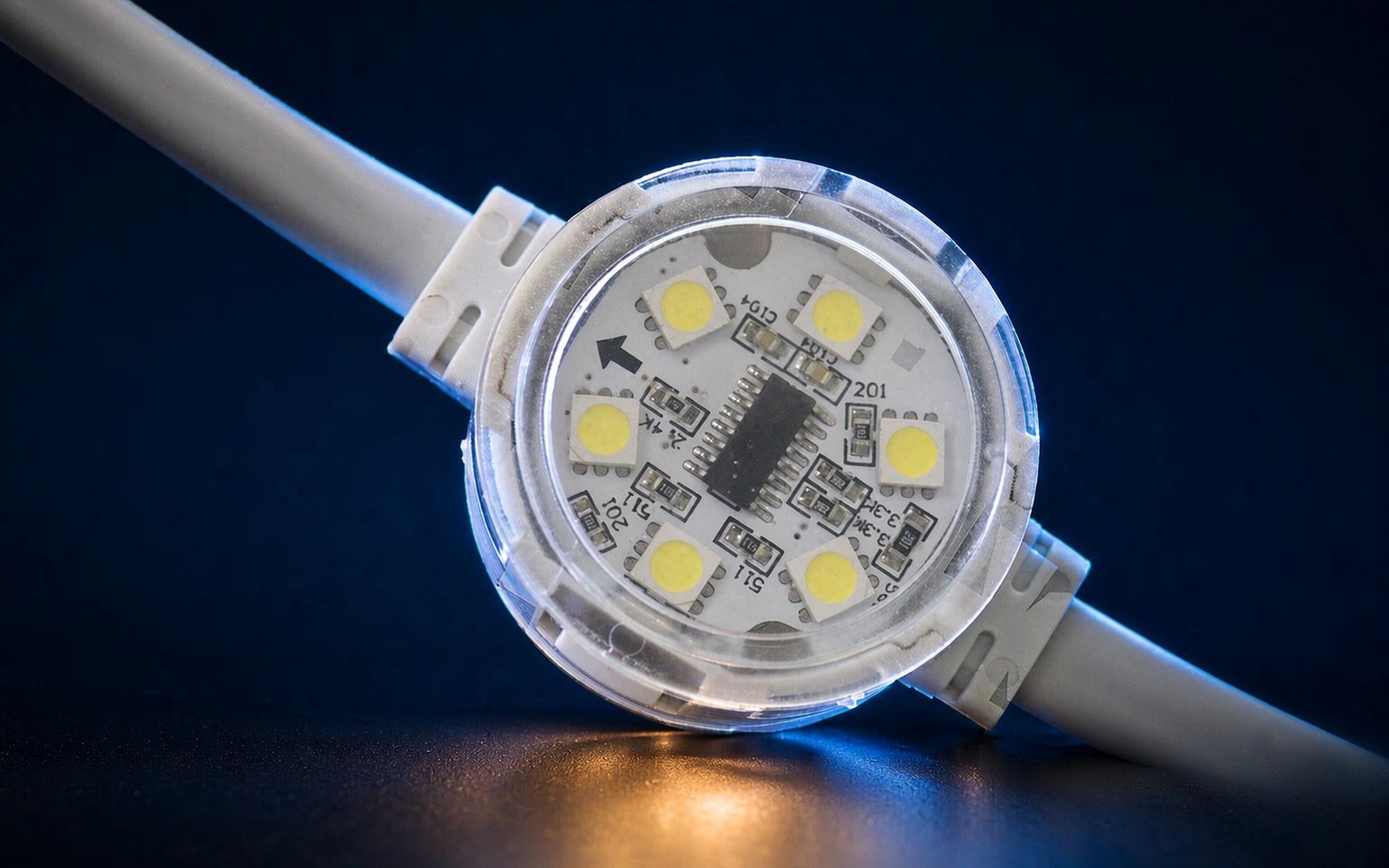
Catalogue detail views for this family — 6063 aluminium housings, IP65 / IP68 sealing and the beam options from 10° to 60°. Alt text and captions describe the actual component shown, not a generic fixture photograph.
Typical applications
- Media facades and animated building skins
- Bridge cable and stay-cable lighting
- Stadium exterior dynamic effects
- Cultural tourism light shows
- Landmark and tower pixel patterns
- Commercial plaza dynamic installations
Quality and documentation
- Node density, colour mode and channel count recorded in the BOM
- DMX512 addressing plan confirmed before order release
- Batch grouping for colour consistency within one visual zone
- Pre-shipment power-on and address-response check
- CE documentation available per model; scope confirmed per project
What we do not do
We do not produce animation content, supply media servers, program controllers, design structural fixing systems or install cabling on site. We do not publish customer drawings, and we do not claim UL, ETL, SAA, RCM, EAC or ISO certification, fixed MOQ, fixed lead times or a blanket warranty. Where a source table writes MDX512, we treat DMX512 as the intended protocol but confirm the specific model before release.
Technical questions
How many points per square metre do I need for a media facade?
It depends on viewing distance and the smallest detail in the content. Configurations in the catalogue range from 36 to 400 points per square metre. A facade viewed from 100 m can use a much lower density than one viewed from a pedestrian plaza; confirm the pitch with the content designer.
What is the maximum number of pixels in one DMX512 string?
The catalogue describes a 160 mm wire spacing and 30 pixels per string on certain pixel products, but these are catalogue descriptions rather than field limits. String length depends on node wattage, cable gauge and supply injection; the client engineer must verify it for the installed configuration.
Can RGB and RGBW nodes be mixed on one facade?
They can, but the DMX channel count differs. The addressing plan and controller universes must be recalculated, so we list the variants on separate BOM lines and confirm the channel budget before the order is released.
Do you write the animation content?
No. We supply the addressable luminaires and coordinate the addressing plan. Content creation, controller programming and media server configuration belong to the client system integrator.
Adjacent products and capabilities
LED Wall Washers
An LED wall washer is a linear outdoor luminaire that grazes or washes a vertical surface from a short setback, using a controlled beam rather than a general flood. Guangdi Xingcan lists 20 wall washer models in its 2026 catalogue, with DC24V input, IP65 construction, 18-72 W power options, 30 degree, 60 degree, 10x30 degree and 10x60 degree beams, and DMX512 control on RGB and RGBW versions..
View productArchitectural Linear Lights
An architectural linear light is a continuous extruded luminaire used to trace building outlines, curtain wall mullions, bridge edges and cornices rather than to wash a surface. Guangdi Xingcan catalogues 10 GD-L linear models plus the GD-U contour families, typically in 1000, 500 and 260 mm lengths at DC24V, with IP65 construction, single colour / RGB / RGBW output and ON/OFF, TTL or DMX512 control..
View productFlexible Linear Lighting
A co-extruded flexible linear profile, commonly called LED neon flex, is a continuous silicone-encapsulated LED strip that emits a dot-free line and can follow curved outlines. Guangdi Xingcan documents 53 such entries: 48 neon flex profiles, 2 wall-washer strips and 3 slim rigid bars, with sections from 6x6 mm to 20x20 mm, a 120 degree emitting angle and top-view, side-view and COB variants..
View productProject BOM & QA
Fixture schedules across 98 catalogued models, batch consistency grouping and power-on checks before packing.
View capabilityScope boundary — GDXC supplies outdoor architectural and landscape LED lighting and DMX512 control systems only. We do not supply indoor residential lighting, road or tunnel main lighting, or bare LED chips and emitters, and we do not publish client drawings, unverified certifications, fixed lead times or fixed prices. CE documentation available per model; scope confirmed per project. RoHS and IP test reports can be requested per model. Established 2014 in Shenzhen; final fixture selection, quotation and installation are confirmed between the client and our technical team.
Send your facade drawings or lighting effect renders
Share an elevation drawing, an effect render or a draft fixture list. Our project engineers return a fixture BOM, beam-angle and optical distribution suggestions, and DMX512 addressing coordination. Final selection, quotation and installation are confirmed with your technical team.